How to Price Group Language Classes (The Formula That Works)
A complete guide to pricing group classes alongside individual lessons. Covers per-student rates, teacher earnings, enrollment models, and the math behind profitable group pricing.
Group classes are the most under-used revenue lever for independent language teachers. Done right, you earn 50-100% more per hour while each student pays 40-60% less than a private lesson. Everyone is better off.
But pricing them wrong means either you earn less than your 1:1 rate (defeating the purpose) or students feel they’re overpaying for shared attention.
Here’s the formula that works.
The Basic Math
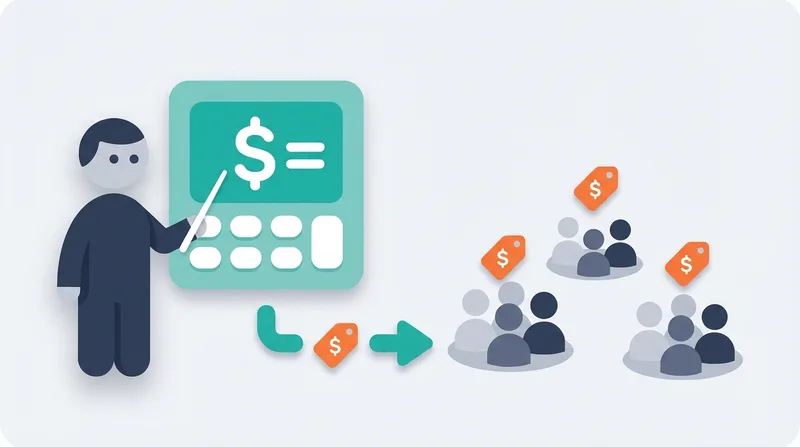
The standard approach: charge 40-50% of your individual rate per student.
| Your 1:1 rate | Group rate/student (45%) | 3 students | 4 students | 5 students |
|---|---|---|---|---|
| $25/hr | $11/student | $33/hr | $44/hr | $55/hr |
| $35/hr | $16/student | $48/hr | $64/hr | $80/hr |
| $45/hr | $20/student | $60/hr | $80/hr | $100/hr |
| $60/hr | $27/student | $81/hr | $108/hr | $135/hr |
At 45% per student with 4 students, you earn 80% more than a private lesson. At 5 students, more than double. Meanwhile, each student pays less than half of what they’d pay for 1:1.
Calculate your exact group rates with our free Pricing Calculator - it includes group pricing recommendations.
How to Choose Your Per-Student Rate
Factors That Push the Rate Higher (closer to 50%)
- Small groups (3 students) - less “savings” effect for students
- Specialized content (business English, exam prep) - higher perceived value
- You’re the only teacher offering this specific group in your area/niche
- The group includes materials, homework, and individual feedback
Factors That Push the Rate Lower (closer to 35-40%)
- Larger groups (5-6 students) - more “shared attention” feeling
- General conversation practice - perceived as lower value than structured curriculum
- Competitive market with many group options available
- Students are price-sensitive (developing economies)
The Floor Rule
Never charge less than 35% of your 1:1 rate per student. Below that, even a full group earns you less per hour than individual lessons, and the extra coordination work isn’t worth it.
Enrollment Models
Model 1: Monthly Subscription
Students pay a fixed monthly fee for 4 weekly sessions.
Example: $60/month for 4 group sessions (= $15/session)
Pros: Predictable income, automatic renewal, fewer payment conversations Cons: Students may feel locked in, harder to handle months with 5 weeks
Best for: Ongoing conversation groups, regular weekly practice
Model 2: Term-Based Enrollment
Students enroll for a fixed course (8 weeks, 12 weeks) and pay upfront or in installments.
Example: $120 for an 8-week course (= $15/session)
Pros: Clear start/end dates, easier to structure curriculum, higher commitment Cons: Re-enrollment required each term, some students drop between terms
Best for: Structured courses (grammar, exam prep, business skills)
Model 3: Drop-In With Package
Students buy a group class package (e.g., 10 sessions) and attend when they can.
Example: $130 for 10 group sessions (= $13/session)
Pros: Maximum flexibility for students, works for irregular schedules Cons: Unpredictable attendance, harder to build group cohesion
Best for: Conversation clubs, casual practice groups
The Attendance Challenge
Unlike 1:1 lessons where a cancellation is binary (they come or they don’t), group classes always run regardless of individual attendance. This creates a pricing dilemma.
The Rule You Need
Group classes run regardless. Individual absences are not refundable.
This must be communicated upfront. If students can skip freely and get credits back, your income becomes unpredictable and students treat the group casually.
How to say it:
“The group class runs every Tuesday at 6pm. If you can’t attend a session, please let me know so I can plan accordingly, but missed sessions are not refundable as the class runs regardless.”
The Grace Policy
Some teachers allow one makeup per term (e.g., attend a different group if you teach multiple) or offer a recorded summary of what was covered. This builds goodwill without undermining your pricing.
Pricing Mistakes to Avoid
1. Pricing Too Low
If your group rate per student is so low that a full group earns you the same as a 1:1 lesson, you’re working harder for the same money. Groups are meant to increase your hourly earnings, not maintain them.
2. Not Accounting for Minimum Viable Size
If you need 4 students to make the group financially viable and only 2 sign up, do you run it at a loss? Set a minimum: “This group runs with 3+ students.” Below that, offer to reschedule or refund.
3. Mixing Levels
A group with one A1 student and one B2 student doesn’t work. Price by level - beginners and advanced can have different rates if the preparation effort differs.
4. Forgetting the Enrollment Admin
With 5 students in a group, you’re tracking 5 separate enrollments, 5 payment statuses, and attendance for each session. That’s significant admin that your pricing should account for.
Teeachie tracks group enrollments, per-student payment status, and attendance automatically. See who paid, who attended, and who owes what - per student, per group, per period.
How Group Pricing Fits Your Overall Strategy
The ideal teaching mix for maximizing income:
| Teaching hours | Allocation | Weekly revenue |
|---|---|---|
| 15 hrs of 1:1 at $35/hr | 75% of time | $525 |
| 4 hrs of groups (4 students) at $16/student | 20% of time | $256 |
| 1 hr admin | 5% of time | - |
| Total: 20 hrs | $781/week ($3,124/mo) |
Compare to 20 hours of pure 1:1 at $35/hr = $700/week ($2,800/mo). Groups add $324/month while teaching the same hours.
Apply for free beta access to Teeachie - group class management included.
Related: Group class scheduling guide | How to sell lesson packages | Pricing Calculator | Payment tracking features