How to Reduce No-Shows in Online Language Lessons (7 Proven Methods)
Practical strategies to reduce student no-shows and late cancellations in your language teaching business. From policies to reminders to scheduling systems.
A student no-shows. You waited 15 minutes staring at an empty Zoom room. That’s an hour you could have filled with a paying student, gone forever.
If you teach 20 hours a week and experience even one no-show per week, that’s roughly $120-160/month in lost income. Two per week? $240-320/month. Over a year, that’s $1,500-4,000 you’ll never get back.
Here are 7 methods that actually work to reduce no-shows, based on what successful independent language teachers do.
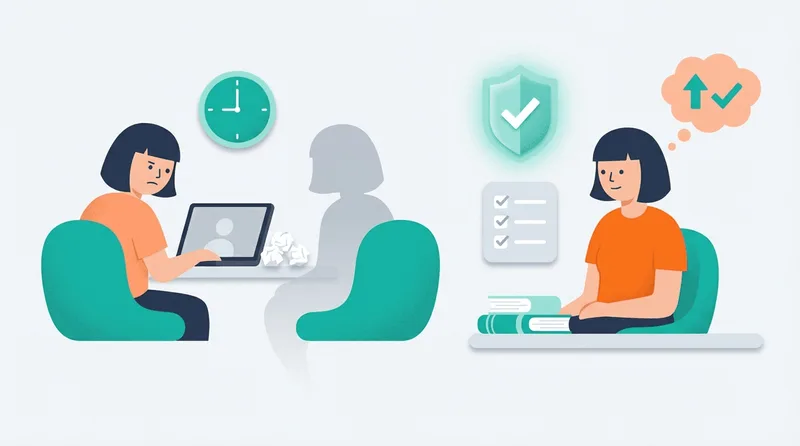
1. Have a Written No-Show Policy (and Share It Before the First Class)
This is the single most effective thing you can do. Teachers with a written policy experience 40-60% fewer no-shows than those without one.
Your policy should specify:
- How long you wait before marking a class as a no-show (10-15 minutes is standard)
- What happens financially (most teachers charge 100% for no-shows)
- Whether there’s a grace period for first-time offenses
The key is sharing it before the first class, not after the first no-show. Introducing a policy after someone misses a class feels punitive. Sharing it upfront feels professional.
Create your no-show policy in 2 minutes with our free Policy Generator
2. Require Packages or Prepayment
Students who have prepaid for a package of classes are significantly less likely to no-show. The psychology is simple: they’ve already invested money and don’t want to waste it.
Per-class payment creates a “low commitment” dynamic where missing one class feels costless. A 10-class package at a small discount creates commitment while also giving you predictable income.
Not sure what to charge for packages? Use our free Pricing Calculator to get exact numbers.
3. Send Reminders (But Not Too Many)
Research on appointment attendance consistently shows that reminders reduce no-shows by 25-35%. The sweet spot for language lessons:
- 24 hours before: A brief message confirming the class. “See you tomorrow at 3pm!”
- Optional: 1-2 hours before: Only for students with a history of forgetting.
Don’t send 3+ reminders - it signals that you expect them to forget, which undermines the professional relationship.
The best medium is whatever you already use to communicate: WhatsApp, Telegram, email. Match the channel to the student.
Get ready-to-use reminder templates in our Message Generator
4. Make Rescheduling Easy (Easier Than Not Showing Up)
Many no-shows happen because rescheduling feels harder than just not showing up. The student thinks “I’ll just skip this one” because the alternative is a 5-message exchange about finding a new time.
Make rescheduling as frictionless as possible:
- Allow rescheduling with 24+ hours notice at no charge
- Offer 2-3 alternative time slots instead of asking “when works for you?”
- Consider student self-booking where they can pick a new slot themselves
When rescheduling is easy, students reschedule instead of disappearing.
5. Build a Relationship (Not Just a Schedule)
Students are much less likely to no-show on someone they feel personally connected to. This doesn’t mean being their best friend, but:
- Remember details about their life (job changes, travel, family)
- Follow up after milestones (“How did the presentation go?”)
- Send a brief message after their first class
- Use their name consistently
A student who sees you as “my teacher Maria” rather than “my 3pm Tuesday slot” is far less likely to ghost you.
6. Identify and Address Repeat Offenders Early
One no-show is a mistake. Two is a pattern. Three is a problem you need to address directly.
After the second no-show, have a direct conversation:
“I’ve noticed you’ve missed a couple of classes recently. I want to make sure our schedule still works for you. Would a different day or time be better?”
This accomplishes two things: it acknowledges the pattern without being accusatory, and it offers a solution. Many chronic no-shows are actually scheduling problems in disguise - the student booked a time that doesn’t actually work for their routine.
Use our Message Generator for ready-to-use scripts for this conversation
7. Use a System That Tracks Everything
The teachers with the lowest no-show rates aren’t the strictest ones. They’re the most organized. They:
- Track which students cancel or no-show (and how often)
- Apply their policy consistently (not selectively)
- Follow up within 24 hours of every no-show
- Have the financial impact tracked automatically
When you’re managing 15+ students across spreadsheets and WhatsApp, it’s easy to let a no-show slip through. A dedicated system prevents that.
Teeachie tracks cancellations and no-shows automatically, applies charges based on your policy, and shows you which students need attention. Apply for free beta access to try it.
The Bottom Line
No-shows will never be zero. But with these 7 methods, most teachers reduce them by 50-70%:
- Written policy shared upfront
- Package prepayment
- Smart reminders (24h before)
- Easy rescheduling
- Personal connection
- Early intervention for repeaters
- Systematic tracking
Start with #1 and #2. They have the biggest immediate impact and cost nothing to implement.
Related: Handle last-minute cancellations | Cancellation policy guide | Set availability without burnout | Scheduling features